
Reading comprehension is an essential reading skill. But in order to achieve comprehension, there’s a literacy fundamental that’s crucial to develop: reading fluency.
Fluency is the ability to read accurately and at an appropriate rate, with expression that reflects understanding. A fluent reader is able to:
- Recognize words quickly and automatically
- Decode words with little effort
- Read smoothly, using expression and suitable phrasing
When students can read words effortlessly, they free up mental energy to focus on comprehension. In fact, proper intonation and phrasing are often strong indicators that a student understands what they are reading.
As IXL is aligned with best practices in reading science, IXL English Language Arts provides many opportunities to help students develop reading fluency. Let’s explore how educators can use IXL to build fluency, including reading accuracy, rate, and expression.
Build reading accuracy with explicit instruction and IXL skills
Video tutorials
For students to read accurately they need clear, direct instruction and modeling, which IXL’s reading video tutorials provide. Educators can use these videos during whole-group instruction, small-group intervention, or independent practice.
Each video:
- Introduces the new concept
- Models how to apply the skill
- Includes multiple guided examples
For instance, in the video for Find the short a word, students first hear the /a/ sound, then watch how it is formed, and finally practice identifying it in words. This structured progression helps students build understanding and accuracy before moving to independent practice.

IXL skill practice
Once learners are ready for practice, IXL’s phonics skills emphasize the internal structure of words and provide repeated opportunities to practice decoding. Students encounter the same spelling patterns across word-level, sentence-level, and text-level practice. This repetition builds automaticity—recognition of words without effort.
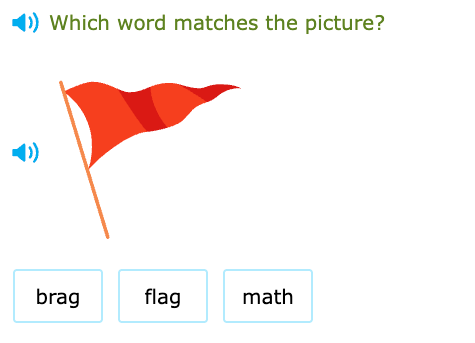
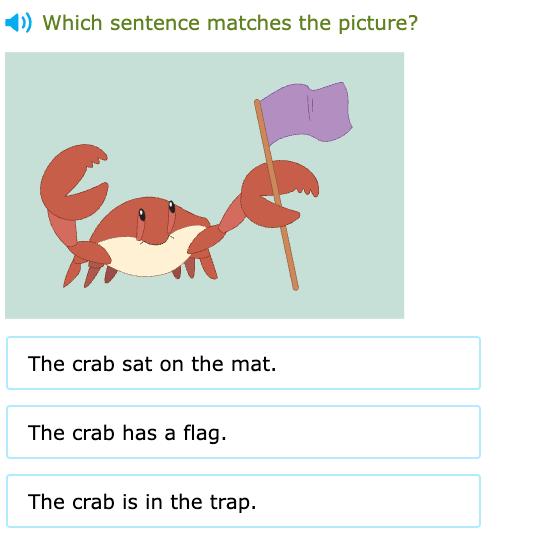
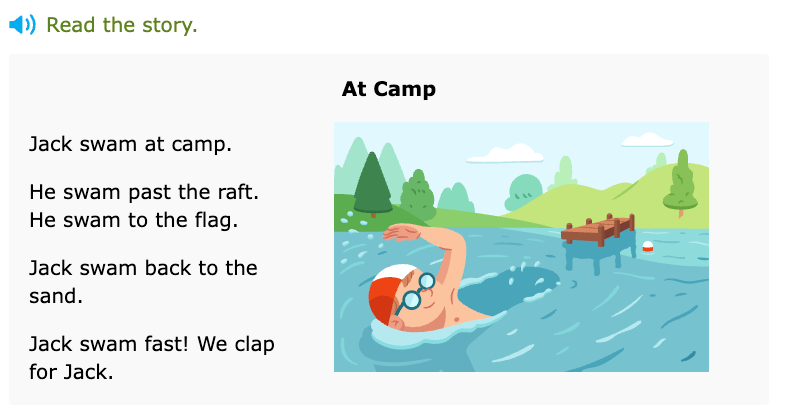
Here is an example of how repeated exposure to words like flag across contexts strengthens recognition and supports smoother reading:
| 1→ | 2→ | 3 |
|---|---|---|
| Word level | Sentence level | Text level |
| Choose the short a word that matches the picture (A57) | Choose the short a sentence that matches the picture (BEB) | Read short a stories (NT9) |
 |
 |
 |
IXL’s text-level skills also give students structured practice reading connected texts across a range of levels. Decodable text skills are carefully controlled to focus on specific phonics patterns. This encourages students to apply new skills, building confidence and accuracy through repetition.
For instance, notice how this long vowel story provides students with many opportunities to read long ‘a’ words in context:
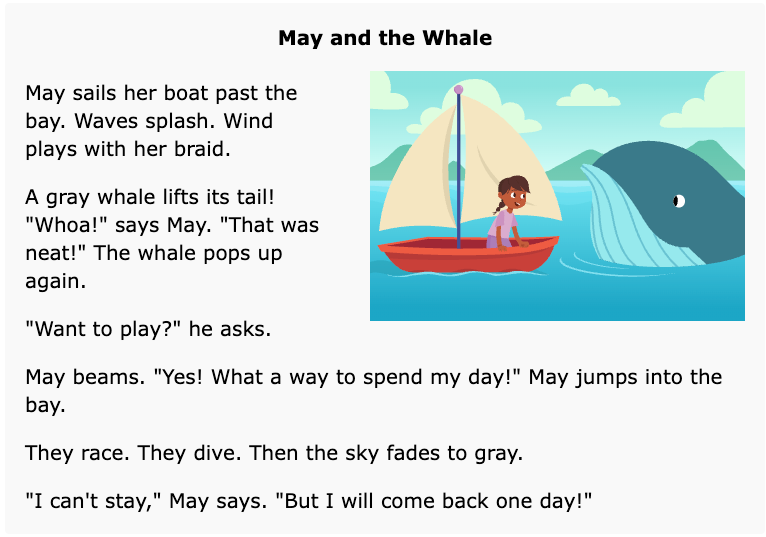
Once students demonstrate confidence with decodable texts, they can transition to IXL’s read-alone literary and informational text skills. These grade-level texts strengthen students’ decoding skills and enable them to practice fluency across genres.
Providing guidance on reading accuracy:
At every stage—word-level, sentence-level, decodable text, and read-alone text—intentional feedback helps ensure students are reading accurately and building strong foundations for fluency.
When a student answers a question incorrectly in an IXL skill, that student receives a detailed explanation of the correct answer. For educators, the strategies below can be used throughout the progression to help students decode fully, monitor their reading, and self-correct when needed.
- Encourage students to practice making sounds and noticing articulation:
- “Where is your tongue when you say /n/?”
- “Is your mouth open or closed when you make that sound?”
- Advise students to blend as they go, keeping the sounds moving from one to the other:
- “Say this sound until you figure out the next one…/nnnneeessst/.”
- Use think-aloud modeling:
- “I see the vowel team ai. That pattern usually makes the /ā/ sound. I’ll blend it: /rrrrāāānnn…rain/.”
- Prompt students to self-correct if they are reading inaccurately, first encouraging them to notice when something doesn’t sound right and to reread the phrase or sentence before directing them to a specific word:
- “Does that sound right? Try reading the sentence again.”
- If needed, be more specific: “Look at the vowel. What sound does it make?”
- Urge full decoding instead of guessing:
- “Look at each letter and sound in a word and blend it all the way through.”
- Advocate for active participation with video tutorials, and have students answer along with the videos before the correct response is revealed.
- Pause videos strategically to prompt students to produce sounds or read words independently.
Improve reading rate through purposeful repetition
IXL’s comprehensive curriculum
Repeated reading can be an effective way to improve fluency. IXL’s comprehensive curriculum of skills is organized so students can practice related concepts within a category, reinforcing patterns and increasing automaticity.
This example progression for vowel teams skills provides repeated practice across skills to help students recognize words more easily.
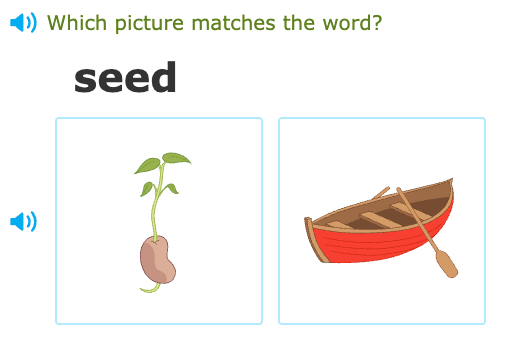
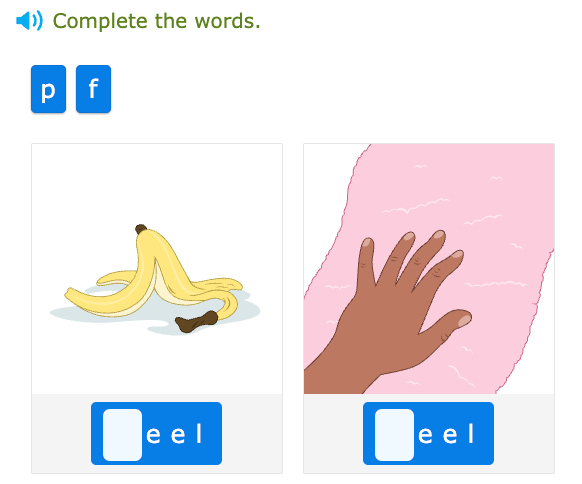
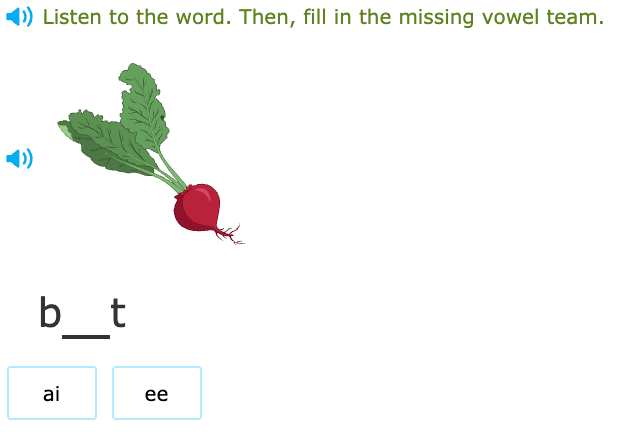
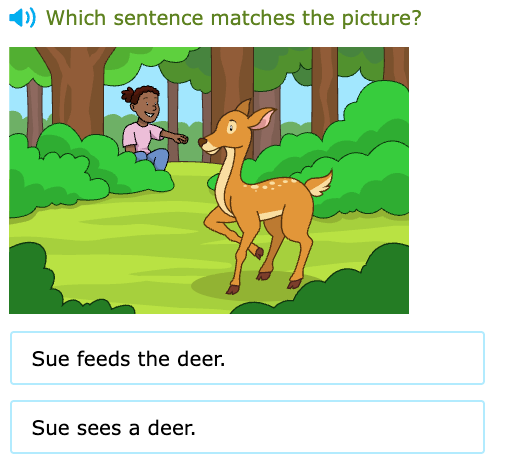
Students can also revisit skills for additional practice. Encourage students to revisit text-level skills (e.g., Read long vowel stories: ee, ea) to reread familiar passages.
Providing guidance on reading rate:
- Compare students’ times across repeated reading and celebrate improvements. For example, track how long it takes to read a passage on the first attempt versus the second or third attempt.
- Encourage students to focus on smoothness rather than rushing.
- Redirect students if they are reading too fast and losing meaning:
- “Slow down just enough so the story makes sense.”
- Coach students to reread difficult phrases instead of restarting the whole passage.
- Prompt students to group words into phrases when their rate is slow due to word-by-word reading:
- “Try grouping those words together.”
- “Can you read that whole part in one smooth phrase?”
Develop reading expression through modeling
Audio support
Prosody—interpreting and expressing meaning through phrasing and intonation—reflects deep understanding. While accurate decoding supports prosody, students can also benefit from explicit modeling. Expression improves when students understand both the text and how fluent reading should sound.
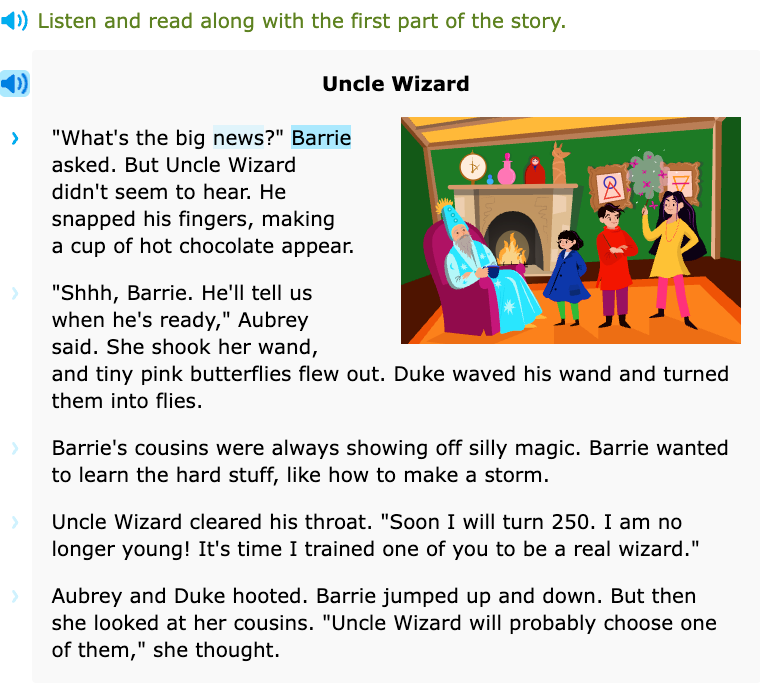
IXL’s read-along literary and informational text skills feature high-quality audio support that models fluent reading. Skills like Read along with fantasy include professional audio models with word-level highlighting. As students follow along, they hear appropriate pacing, phrasing, and expression modeled clearly.
Providing guidance on expression:
- Help students understand that natural expression improves pacing and fluency:
- “Let’s make it sound like you’re talking.”
- “Read it like you’re telling the story to someone.”
- Point out punctuation cues and prompt students to regulate pacing with punctuation:
- “What does this exclamation mark tell you?”
- “Pause at the comma.”
- “Stop at the period and take a breath.”
- Connect expression to meaning. Encourage students to think about the story and characters:
- “Does your voice match what’s happening in the story?”
- “How is the character feeling here?”
- Model and practice:
- Model reading in phrases.
- Model expressive reading.
- Have students practice reading the same section back with expression.
Bringing it all together
IXL supports reading fluency by combining:
- Explicit phonics instruction
- Structured, leveled practice
- Opportunities for independent and guided reading
- Clear models of fluent reading
- Built-in opportunities for repetition
When educators pair IXL practice with intentional instruction and specific, actionable feedback, students make measurable progress in reading accuracy, appropriate pacing, and prosody.
By using IXL strategically and coaching students along the way, educators can help students become confident, expressive, and fluent readers.